Guitar Adventures with TuneSong Tutorials
Each TuneSong Tutorial is like a guitar adventure into a sonic wonderland. Keeping things simple wherever possible.
No musical notation reading is required, just some time, focus and imagination.
The motivation here is to equip intermediate and advanced guitarists with an expanding musical toolbox.
With this in mind, the focus is of course on the music, and music does not necessarily have a direct pathway of learning,
of it does, that directness is related to how clearly the guitarist knows what they want.
In a general sense, there are twelve tonic notes, and seven modes. Each mode has a seven-chord harmony, with each chord matched by a 3 or 4 note arpeggio of the same name as the chord it describes musically. Each lesson begins with a declaration of what mode-based tonality it is in, and then a progression to learn, usually no more than 8-16 bars in length. Although each mode has the potential to include all seven chords, usually there are less chords played than there are in the mode-based tonality.
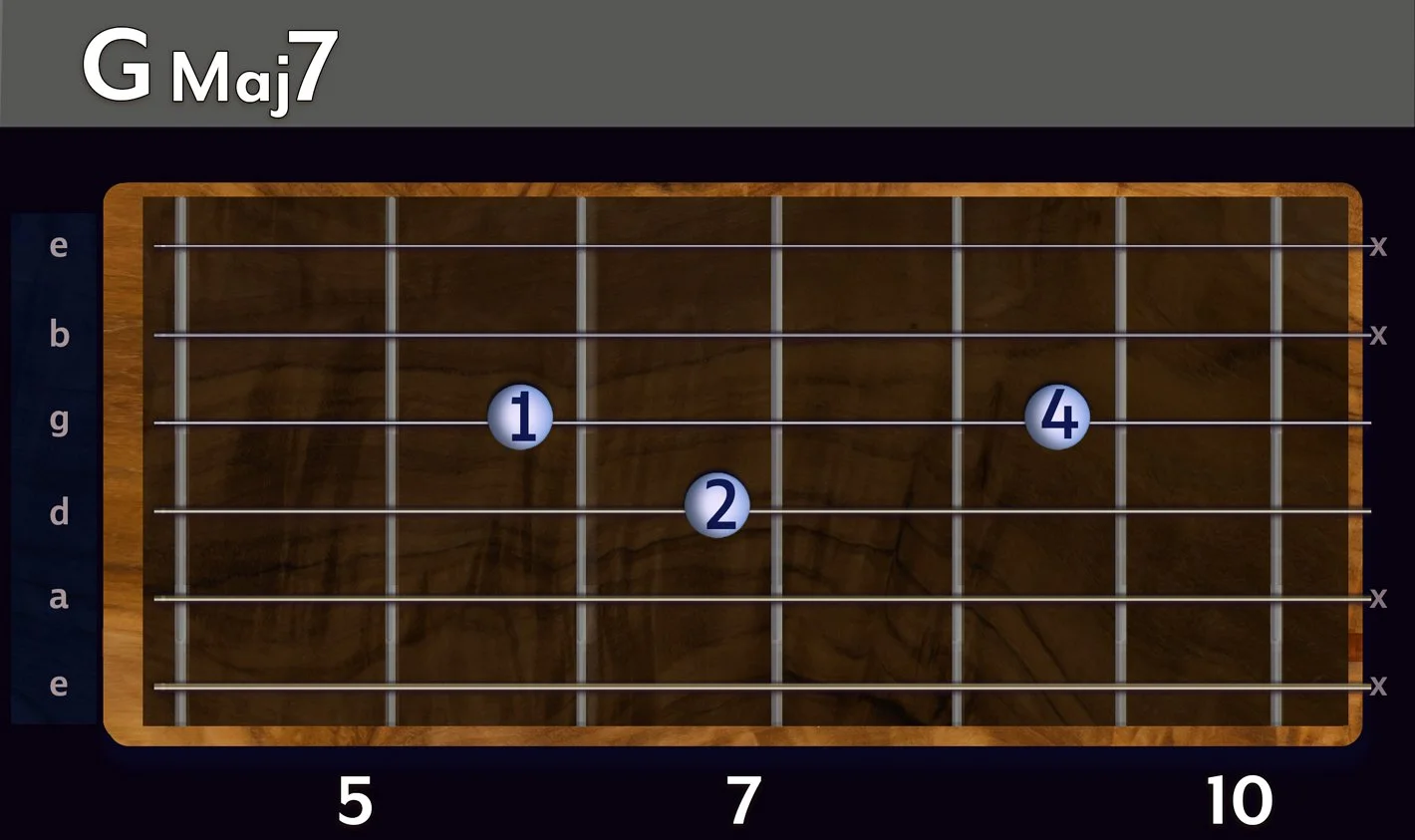
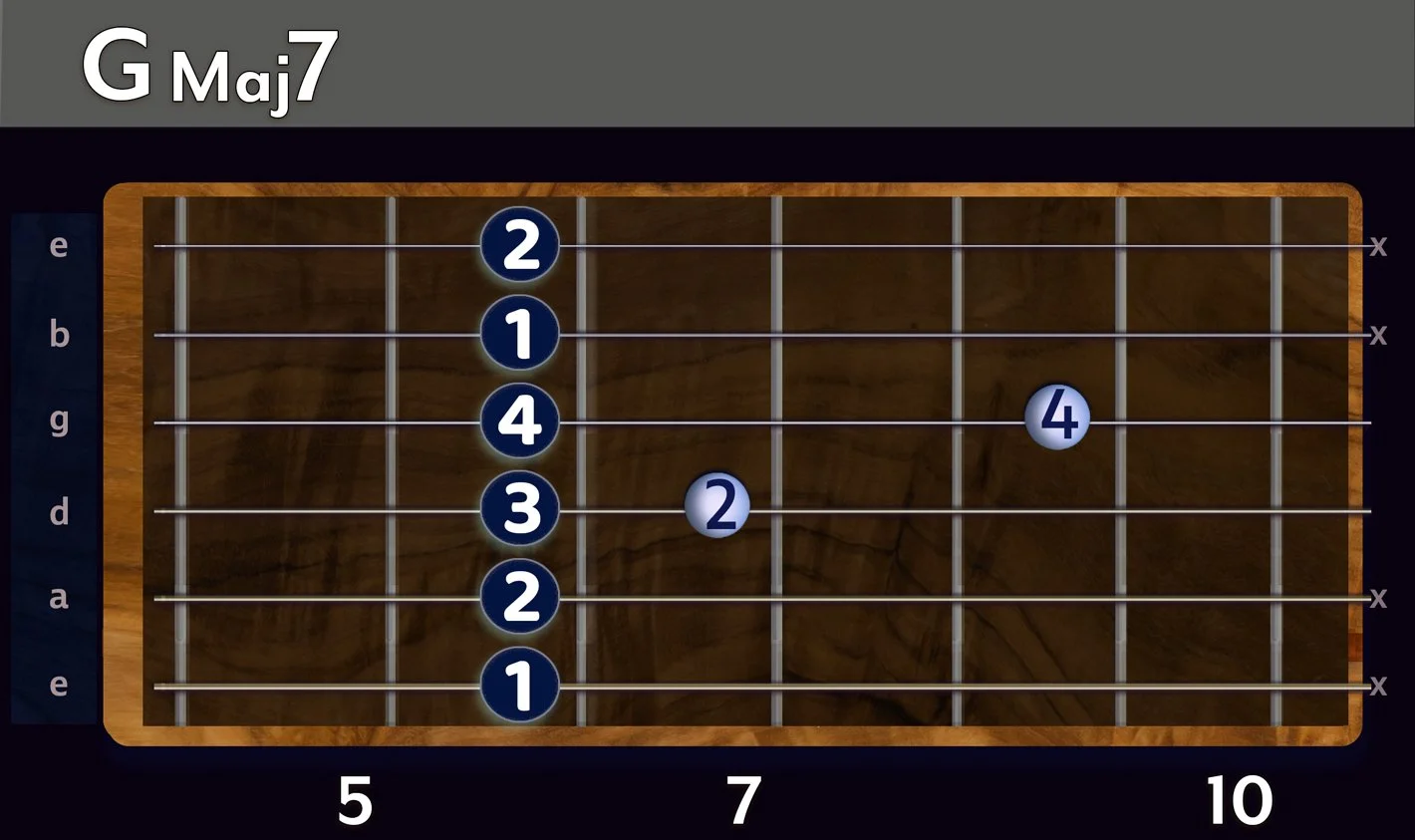
With the foundation of the starting chord chart, the lesson will provide chord maps - often using the “limited note” chord structure technique. Not all of the potential notes of each chord will be present; that is merely a musical choice.
An audio recording will precede the chord chart, giving an idea of how to play through the changes. After the mode diagram section, a longer backing track will be there to use as a basis to practice improvisation with.
A mode is a sequence of notes, derived from the Major Scale. That is where a mode comes from, usually. Potentially much more interesting is where the improvising guitarist takes the mode to in their phrasing, note choice, and so forth. Retraining the muscle memory of the fretting hand to be prepared for realtime melody creation requires musical practice techniques to ensure the guitarist is not unconsciously repeating the sequence of notes they learned in the way they did when first memorising the mode.
TuneSong Tutorials are written and designed by a guitarist with 4 decades of experience and a Bachelor of Arts in Contemporary Music (1991-3, SCU). Many of the melody-preparation practice techniques shown here in different lessons are either directly sourced from University coursework, variations of those, and even a few original “freedom for the fretting hand” techniques.
There are two ways of phrasing a melody and both are good. What you know and how you apply it makes the music your own. The first type of melody is called “stepwise”. One or two frets between each adjacent note in a musical motif line. When first learning a mode, the most often used way is to play the shape at a position on the fretboard up, and then back down again to the tonic note. Not very interesting if that alone is the content of an improvisation. Using the TuneSong Tutorial stepwise improv-preparation techniques, it is quite possible to make this kind of melody sound fantastic.
The second type of melody is known by the title “intervallic”. With a simple enough definition: there are three semitones (three frets on the same string) of musical distance between each adjacent note. Arpeggios are the gateway to learning the sound of intervallic melody potential. Whether a 3 note or a 4 note arpeggio, there is always the distance of either a minor 3rd or a Major 3rd interval between each adjacent note. Knowing how and where to use arpeggios, how to get creative with them, is essential. TuneSong Tutorials make very sure to bring practice techniques that will infuse a sense of melody into the way an arpeggio is used.
This page is under construction … tutorials arriving soon.